Wildlife
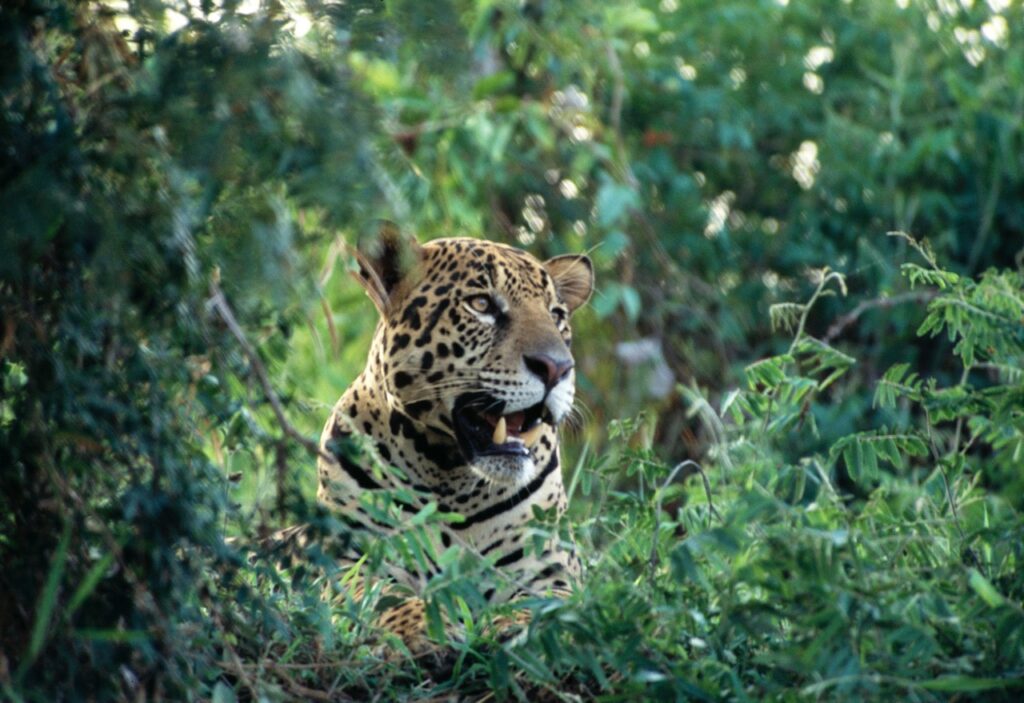
Over six decades, Schaller made the first field studies and championed conservation of the world’s most charismatic mammals. Many survive only thanks to his work.
“Despite all the wrecked countries and tense borders, the informants, corrupt officials and opportunistic expats, Schaller completed an astonishing run of first-ever studies: of Indian tigers, Serengeti lions, Himalayan snow leopards, Brazilian jaguars, Chinese pandas, Gobi Desert wild camels, and the grand mountain goats, sheep, antelope, cats, and bears of the Tibetan Plateau, to which over forty years he was granted a near-unfettered access no other westerner has ever had. As David Attenborough, one of his myriad acolytes, once said, “I thought he must sit back and think: what other impossible creature can I imagine that nobody else could get near?”“
—Miriam Horn in Homesick for a World Unknown
Mountain Gorilla
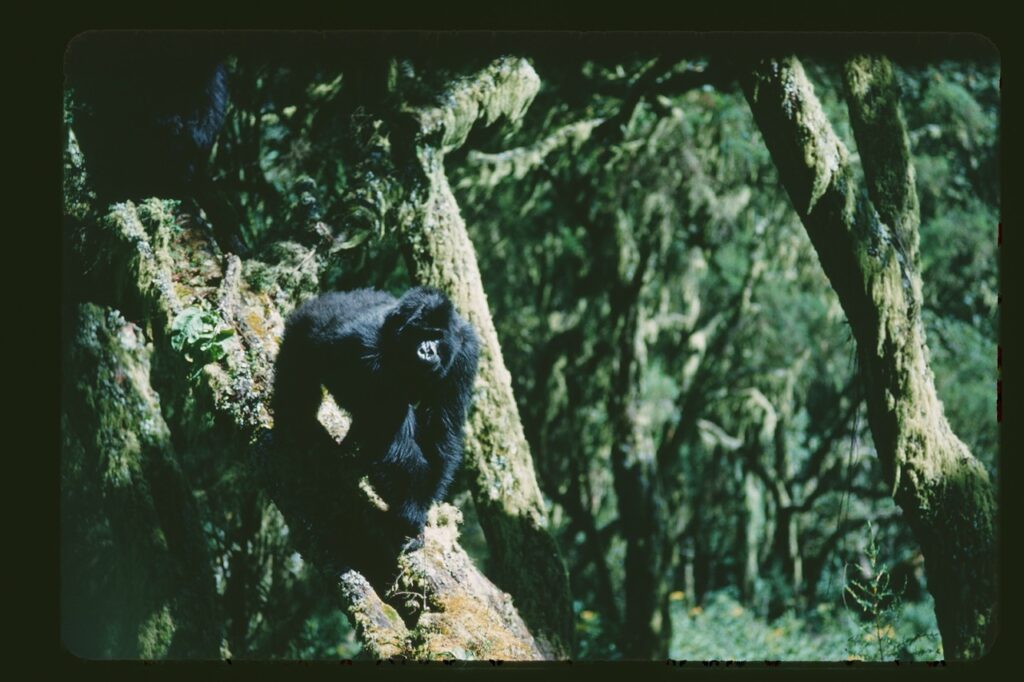
A blackback Schaller called Kicker was open and curious toward young apes from outside his own troop, including 26-year-old George.
Virunga Volcanoes, central Africa, 1959-60. At age 26, Schaller upended 20th century science, living with these feared beasts and finding them to be much like humans—in their singular personalities, tender relationships, worries, empathy and comedy—if far more peaceful.
Tiger
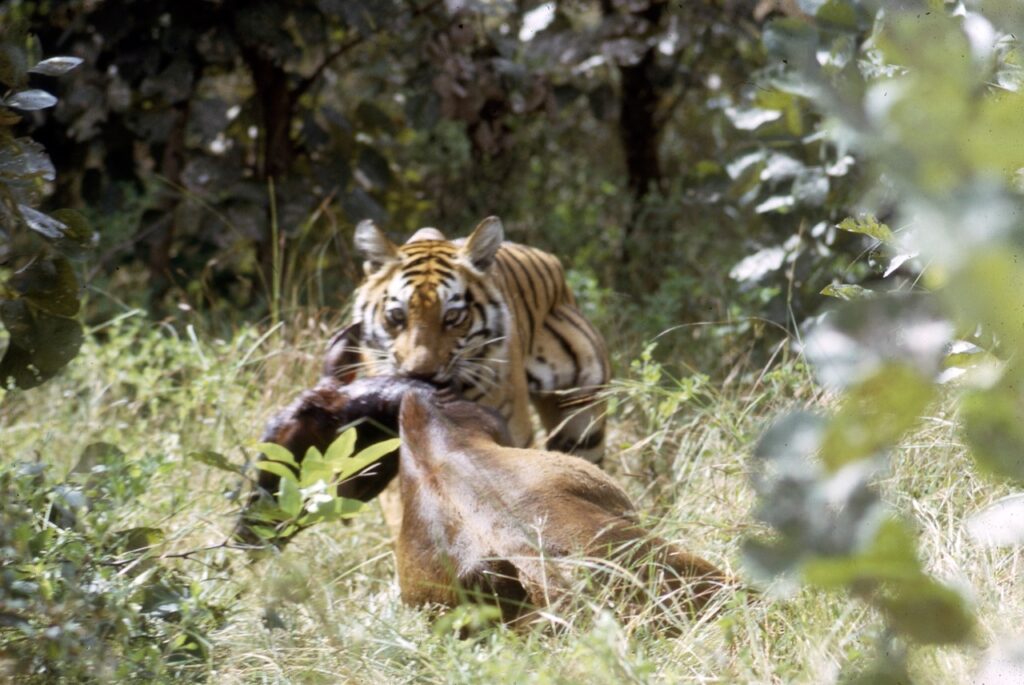
Kanha Park, central India, 1963-65. Still on foot, though now among truly dangerous predators, Schaller chronicled the private lives of tigers as no one ever had, and with an unprecedented rigor on questions essential to conservation like: just how many deer (or cattle) does a tiger need to eat? His work woke up a generation of Indian tiger scientists and champions.
Snow Leopard
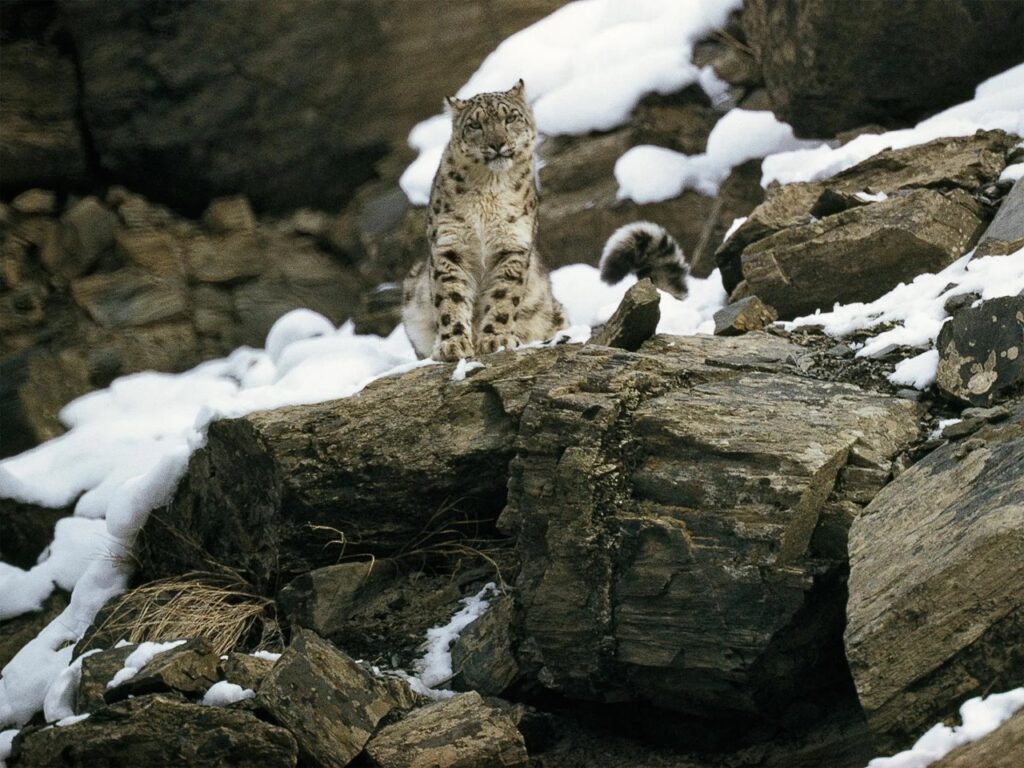
A 12-country range, in 11 of which Schaller worked. Bewitched when a female let him spend a week with her and her cub, Schaller worked for decades with Buddhist monks to ensure the cat’s survival.
Panda
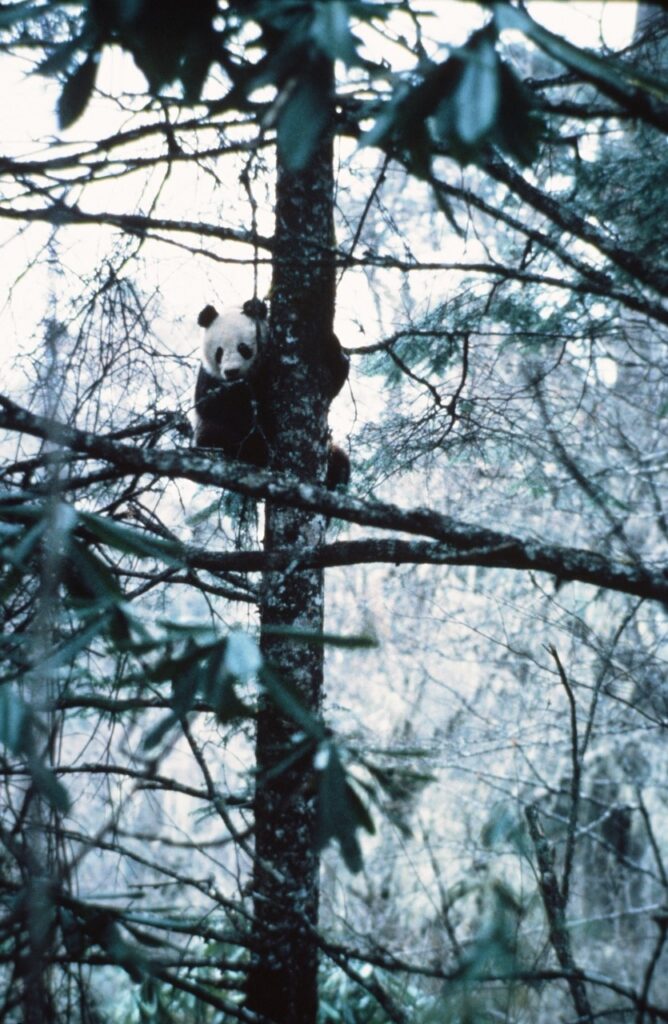
Sichuan Province, China, 1980-85. Extremely difficult to see in the wild, and pushed to the brink by politics and global market demand, pandas gave Schaller five of his most heartbreaking years. While fighting to keep them out of captivity and snares, his attempts to know them stirred his deepest metaphysical reflections. “Mystic science,” one historian has called his melding of two seemingly opposed quests.
Chiru
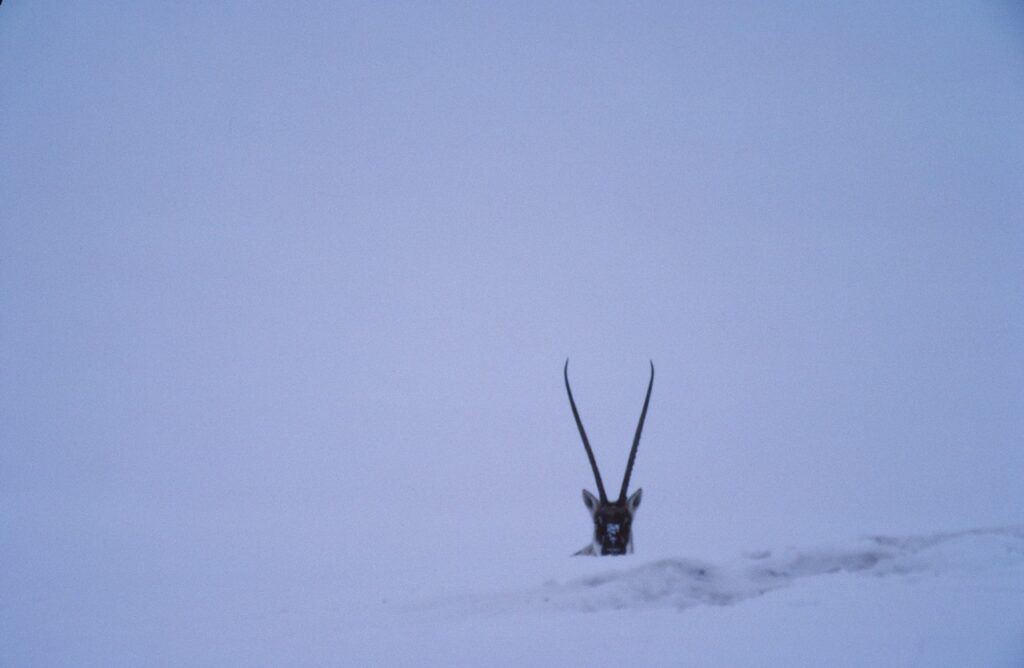
Tibetan Plateau, China, 1985-2020. Adapted to Earth’s most extreme climes, the chiru became a Schaller totem when he realized that they were being slaughtered to satisfy fashionistas’ lust for their exquisite wool. After cracking a global smuggling ring, Schaller persuaded the Chinese to secure their calving grounds.
New from Miriam Horn