Homesick for a World Unknown
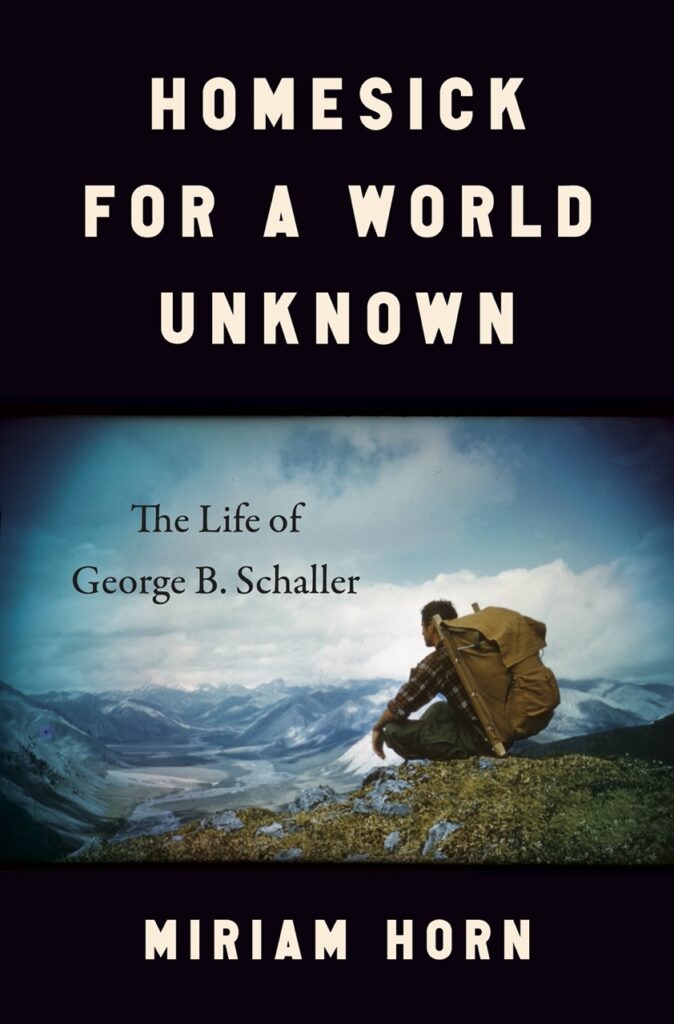
The new book from Miriam Horn
The first biography of field biologist George Schaller, from Penguin Press by Miriam Horn.
Though he studied and saved more charismatic megafauna than anyone before or since, Schaller had declined all efforts to tell his life story. Generally averse to the limelight, his work in countries like China was also often better served by a quiet profile. Only in his eighties did he agree, seeing a last offering he might make to the wild animals to whom he gave his life. The book chronicles his life in nine chapters.
View more photos from Schaller’s life here >
Chapter 1, A Box of Eggs, begins with his birth in Berlin in 1933 to an American socialite married to a diplomat working for Hitler. Moving between occupied Prague, Katowice, Copenhagen and Dresden, George survives aerial bombings, American soldiers’ rough searches, and a narrow escape from the Russian zone—fending for himself much of the time, shunned everywhere, evacuated again and again as the front closes in. In 1947, after two years in a displaced persons’ camp, his mother is allowed to repatriate with her two sons, though George enters the US as an enemy alien.
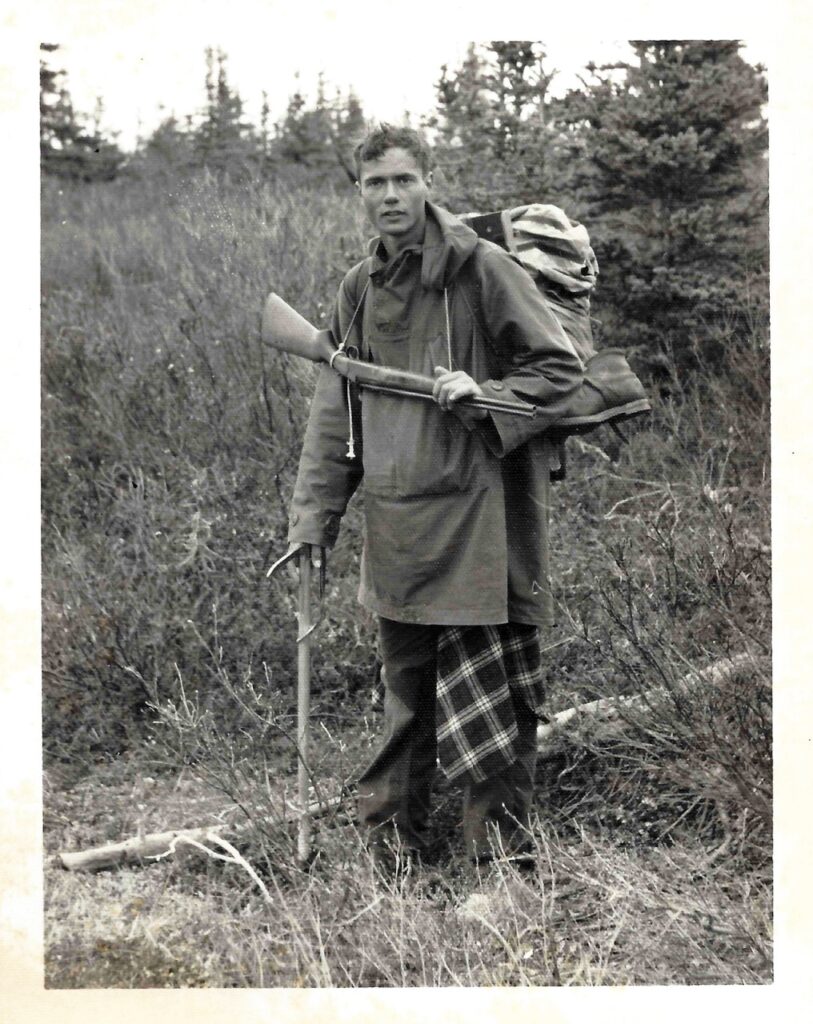
Chapter 2, Coming into the Country, finds George left by his mother with a generous uncle in Webster Groves, Missouri. Sullen and lonely in high-school, he blossoms at the University of Alaska, meeting grizzlies, wolves, and his lifelong love, Kay Morgan. He gets his first lesson here in how deeply people with centuries or millennia of tenure know the animals and land. As the youngest member of the historic 1956 Sheenjek expedition, he plays an essential role at age 23 in the creation of America’s greatest national park, the Arctic National Wildlife Refuge—writing the trip report that helped ultimately sway Eisenhower.
In Chapter 3, Gorilla Honeymoon, Schaller defies all the Great Scientists’ warnings and in 1959 goes with Kay to live, unarmed, among Congo’s mountain gorillas. His study upends every certainty: proving that the world’s most feared beasts will accept a trusting human; opening a window into the rich inner lives of these “brutes;” sounding the earliest alarms on the tenuousness of their hold on survival, and finally taking mad risks to defend them when the Belgians’ abrupt departure leaves chaos and violence. Among the many inspired by his work will be Stanley Kubrick, who will draw on it for the opening of 2001: A Space Odyssey, and Michael Crichton, who will write him into Jurassic Park.
In Chapter 4, Burning Bright, George settles with Kay and their toddler sons in central India to make his next first-ever study, this time of a truly dangerous predator. Going afoot through the ravines and tall grasses he comes to know individual tigers, sometimes at closer range than intended. Again he finds complex social lives, and deepens his groundbreaking ecological insights into the interdependencies among every kind of predator and prey, including humans. His work launches generations of Indian biologists and conservationists; without him, they attest, India would have lost its wild tigers.
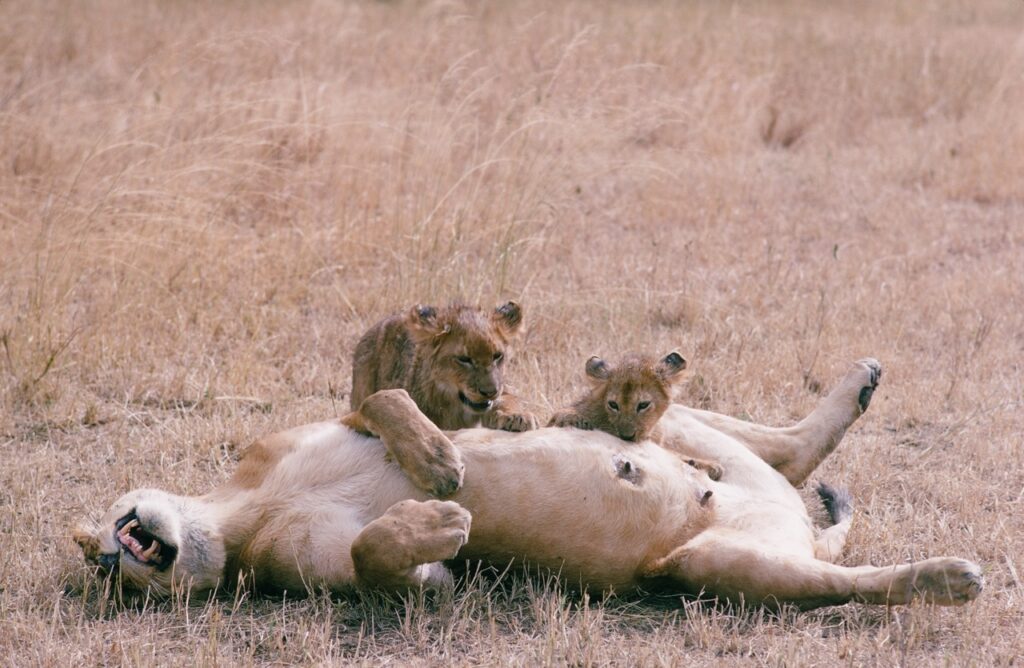
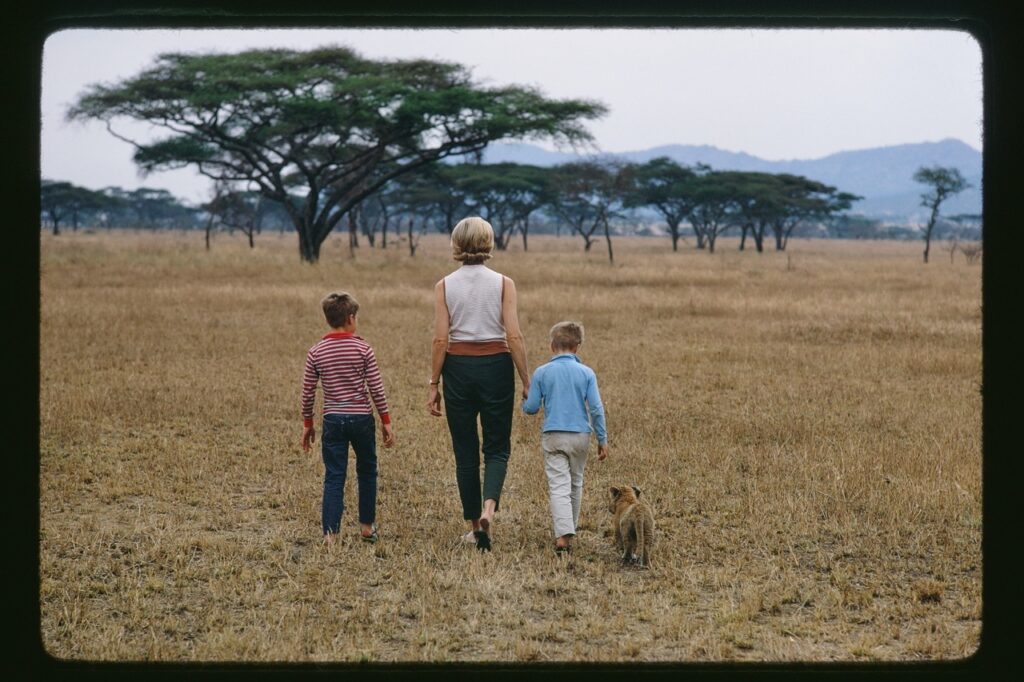
In Chapter 5, A Peaceable Kingdom, Schaller embarks on his third foundational study. EO Wilson deems his unprecedented observations of lions’ cooperative hunting to be his most important, scratching yet another trait off the list of those said to distinguish animals from men. The cats possessed “theory of mind”: the ability to inhabit the perspective and intentions of others. Kay homeschools the boys and hosts the glamorous bunch roaming East Africa’s Serengeti in the 1960s, from Robert Kennedy Sr and Jr to journalists Martha Gellhorn and David Attenborough. To the boys’ delight, giraffes bring down their clothesline, zebras and elephants fertilize Kay’s flowers and their dad brings them pets including a baby warthog, a mongoose and a rescued lion cub.
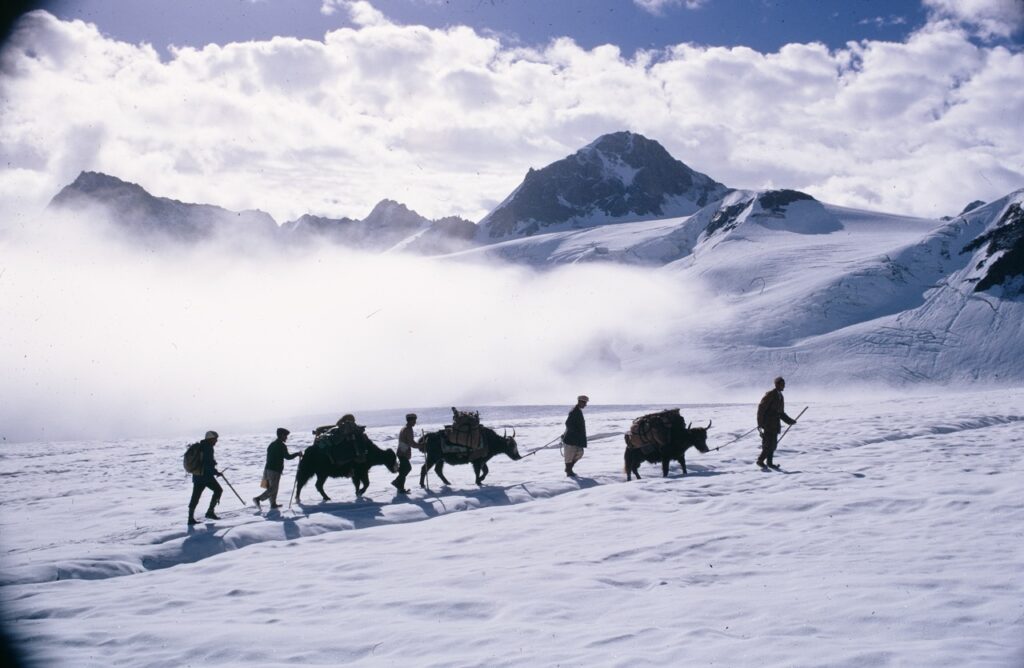
In Chapter 6, Into the High and Magical Realms, Schaller walks thousands of miles across central Asia’s “roof of the world” seeking snow leopards and the world’s great mountain goats and sheep. Joined on his 1973 trip to Nepal’s Shey Gompa monastery by writer Peter Matthiessen, he will become “GS” in Matthiessen’s classic, The Snow Leopard. Five years in these forbidding mountains—the Karakoram, Hindu Kush and Pamirs—bring home to Schaller the bitter truth: a “great dying” is emptying out the world. Desperate to save what he can, he will persuade Pakistan to create Khunjerab National Park; altogether, the parks he will help create on three continents will protect an area the size of France.
Chapter 7, New World Jungles, brings heartache. So that the boys can attend high-school in the U.S., George moves for the first time without the family to Brazil’s great wetland, the Pantanal. The jaguars he is here to study prove so elusive that he resorts to traps and dogs and remote sensing, violating his own precepts on how one should meet other beings. Worst of all, to drive him off, the ranchers kill his study animals; he must bear the knowledge that but for him a mother and daughter jaguar would be alive.
Chapter 8, Rescued to Death, immerses Schaller in his most treacherous social and political conditions since childhood: China emerging from the Cultural Revolution. Entrusted with a National Treasure—the Giant Panda—he spends months crawling through iced bamboo and years fighting the craze driven by Western zoos to take ever more into an often-brutal captivity. He delays publishing a lacerating book for fear he’ll never be allowed to return. Instead, having seen him persevere for five hard years in Sichuan, China grants him access never given another western scientist, to roam for decades in its remotest and restricted regions.
Chapter 9, Forty Years in Tibet, finds Schaller mired year after year by summer blizzards, jeep-swallowing mud and Party politics. On most of his 65 trips, he is without Kay, her health growing fragile and her spirits sinking. Still, Schaller cracks two wildlife trafficking cases, one involving Smithsonian scientists facilitating hunts for endangered species, the other—costing the lives of nearly a million animals—reaching all the way to Park Ave. He completes the essential turn in his life—to people—seeing that Tibet’s nomadic herders and Buddhist monks are central to the survival of fellow species, and share the same vulnerabilities. He wins protection for humans and nonhumans in the second largest Park in the world; and mentors three generations of field scientists who now lead conservation across Asia and the world.
The Epilogue gives a glimpse of the countries to China’s north, west and south into which Schaller pursues Marco Polo sheep, snow leopards, and a transborder Peace Park. He studies the last few Gobi bears in Mongolia, finds the last tracks of rhinos before they disappear from Vietnam, and discovers species in Laos long thought to be extinct. Forever navigating historic upheavals—the collapse of science and order in former Soviet republics; the flood of Kalashnikovs, AK-47s and opium dealers unleashed in Afghanistan by its series of imperial wars; the tensions with the US that landed colleagues studying the last 40 Asiatic cheetahs in Iran’s most notorious prison—he continues into his eighties to combine groundbreaking science with political skills to win essential protections for critically threatened species.
Reviews & Praise
“An invaluable portrait… as lavishly specific as its subject’s lifework… Horn is a spirited, virtuoso biographer and this tour de force is electric with Schaller’s dramatic and audacious pursuits, epic fortitude and determination, intrepidness and diplomacy, camouflaged pain and sheer ecstasy over the marvels of Earth, all charged by his resounding belief that ‘every being has an equal claim on life and freedom.’”—Donna Seaman, Booklist, Starred Review
“Comprehensive biography of the renowned scientist and adventurer … A fine account of a life well lived, to the benefit of all who love animals.” —Kirkus, Starred Review
“An intimate portrait of a quiet man whose life has been dedicated to protecting all the most vulnerable—human and animal—from degradation and extermination … A must-read for anyone interested in the history of conservation, as well as readers looking for solutions to current-day conservation crises.—Laura Nan Hargrove, Library Journal, Starred Review
“George Schaller seems to have met, and understood, every animal on earth, from Serengeti lions to South American jaguars to Tibetan brown bears. As notable for his foundational texts as for his unorthodox methods, Schaller could lasso an anaconda and mesmerize a panda. (Then there were the unusual pets, the lion cub, warthog, sand boa, and mongoose among them). First in the field, Schaller was the last of his kind; Miriam Horn makes us homesick for his brand of immersive adventure in this splendid, gracefully written biography.” —Stacy Schiff, Pulitzer Prize-winning author of The Revolutionary
“A magnificent and inspiring book on a magnificent and inspiring life. George Schaller’s work has forever changed our understanding of animals and the science of conservation and field biology, and this book explores the deep–and at times dark–well from which he draws his extraordinary courage, compassion, and insight. I was riveted from page 1, and you will be, too.” —Sy Montgomery, National Book Award Finalist and New York Times bestselling author of The Soul of an Octopus
“Before there was Goodall or Fossey, before there were National Geographic wildlife films, school conservation clubs, Earth Day, there was George Schaller, our greatest naturalist. For 70 years, he has gone to Earth’s last wild places to understand their animals, to translate and advocate for them, all while seemingly never leaving a soiling footprint in his wake. This is the beautiful biography that those of us in awe of Schaller have waited for.” —Robert Sapolsky, New York Times bestselling author of Determined and Behave
“An enthralling, engaging masterwork, Homesick for a World Unknown follows almost day by day the life of the pioneering field biologist George Schaller. As he did, we live among Congo gorillas, Indian tigers, Serengeti lions, Tibetan bears. He taught Jane Goodall how to study chimps. He set an example for whole generations of scientists. What a story!” —Richard Rhodes, Pulitzer Prize-winning author of The Making of the Atomic Bomb and Scientist
“A brilliant, beautifully crafted biography of the world’s most intrepid explorer and naturalist. Miriam Horn captures George Schaller’s relentless, patient encounters with Africa’s mountain gorillas, Nepal’s snow leopards and dozens of other fast-disappearing wildlife throughout the globe. Schaller’s life is a heart-rending story of physical courage, stamina and human empathy for the private lives of these remarkable creatures. Horn’s Schaller is at once an adventure story, a love story and an inspiring celebration of scientific inquiry. A formidable achievement.” —Kai Bird, Pulitzer Prize-winning historian and director of the Leon Levy Center for Biography