The field biologist who redefined conservation; Mongabay review
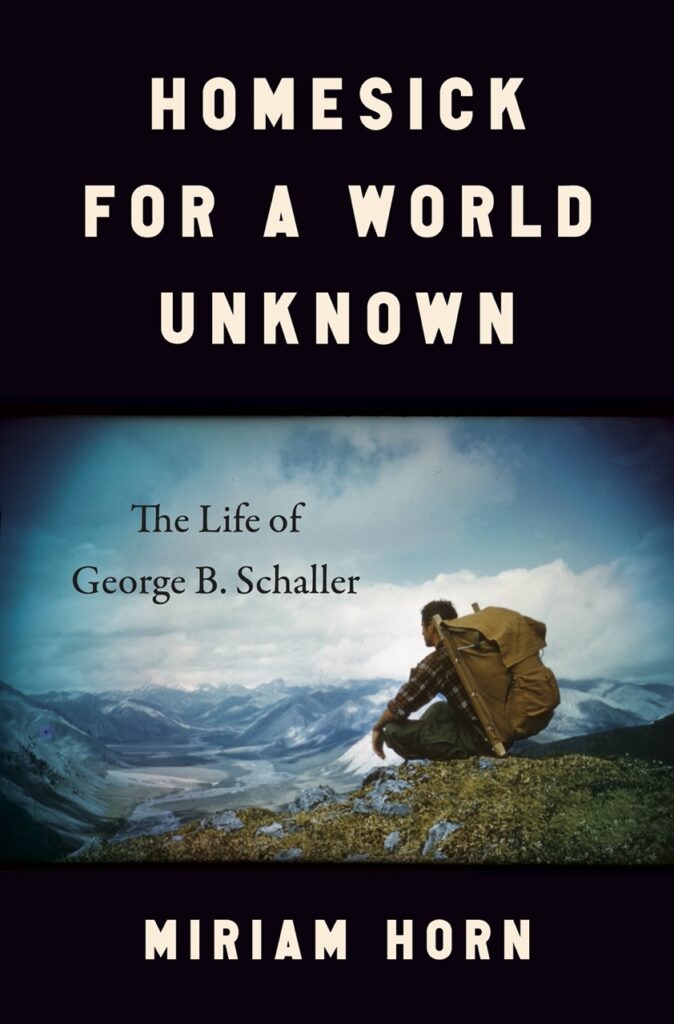
Mongabay Editor Rhett Ayers Butler reviews Miriam Horn’s new biography of George Schaller, Homesick for a World Unknown.
Some lives seem to belong less to a nation or a profession than to a disposition. George B. Schaller’s was one of them. He belonged, above all, to animals—gorillas, lions, tigers, snow leopards, pandas—and to the landscapes that still made room for them. In Homesick for a World Unknown: The Life of George B. Schaller, Miriam Horn attempts something both straightforward and unusually difficult: to write a full biography of a man who spent most of his life turning his attention away from himself.
Schaller is not obscure. He is widely regarded as the most important field biologist of the twentieth century, a figure whose work reshaped zoology, conservation biology, and the way humans think about animal lives. Yet he remains oddly resistant to biography. He disliked introspection, avoided publicity, and wrote sparingly about his own emotions even when describing moments of extreme danger or revelation. Horn’s achievement is to take this reticence seriously rather than try to overcome it. The result is a book that is expansive without being intrusive, admiring without being reverential, and alert to ambiguity even when recounting an extraordinary career.
The result is a portrait of a life oriented outward, toward other forms of existence, at a moment when such orientation feels increasingly rare. Schaller did not seek to dominate nature or withdraw from it. He tried, persistently, to understand it on its own terms. That ambition, modest and radical at once, gives the book its lasting weight.
New from Miriam Horn